Reforestation
Assess a reforestation claim beyond the tree count
Ask about ecological objectives, local species, land rights and monitoring before treating planting as restoration.
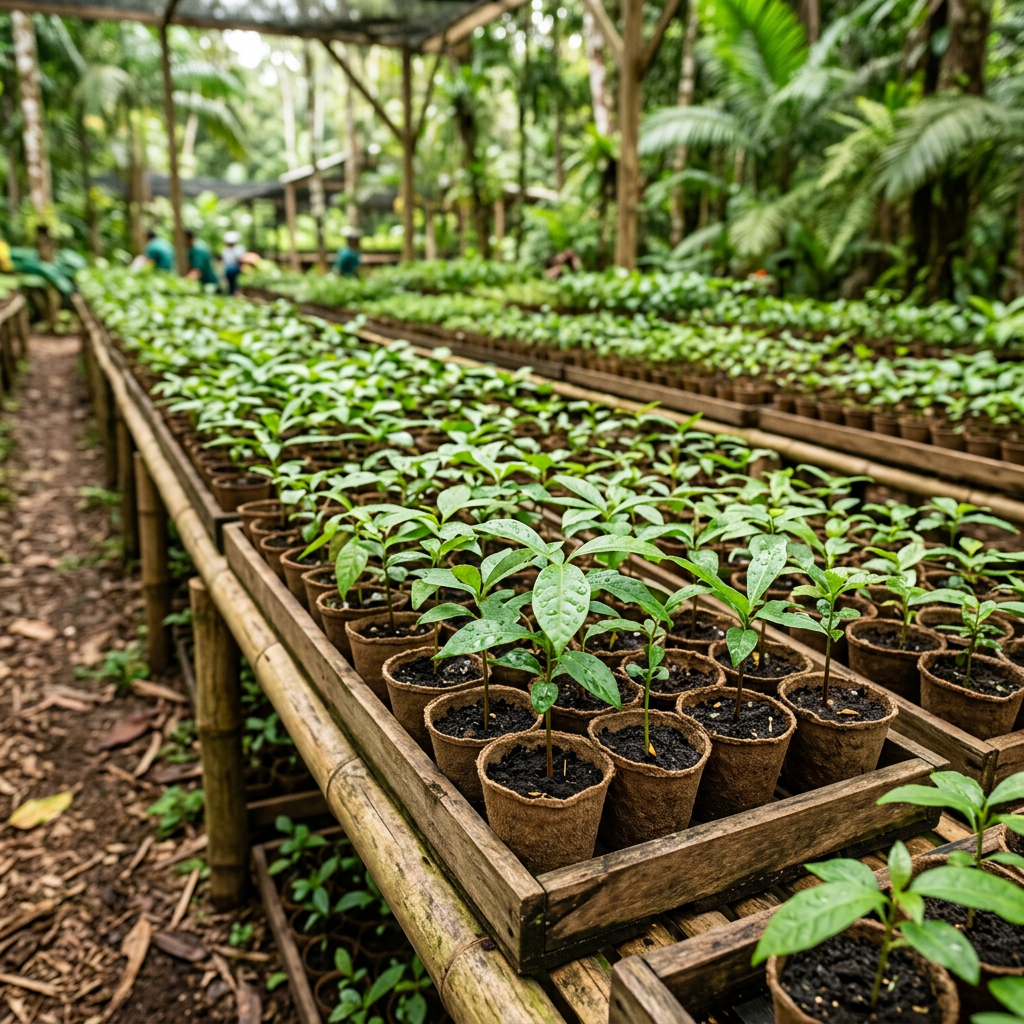
Planting and restoration are not synonyms
A commercial plantation, rehabilitation of degraded land and restoration of a natural ecosystem can have different objectives. A tree count alone does not tell you which outcome a project is pursuing. Ask for the baseline, location and intended ecological outcome.
Match species to the site
Ask why the proposed species are appropriate for local soils, rainfall and habitat. Native species and mixed planting may support ecological goals, but successful restoration also depends on site preparation, management, natural regeneration and community involvement. Avoid assuming that a single planting method works everywhere.
Check people and land
Clarify who owns or manages the land, how local rights are addressed and who maintains the planting. Understand whether the project could displace existing vegetation or other land uses. Funding a nursery is not the same as securing long-term management of the planting site.
Separate the claims
A planting commitment is not a survival result; a carbon estimate is not a verified carbon credit; and a restoration contribution is not proof that a purchased timber shipment is certified. Ask for the method and evidence supporting each distinct claim.
The FAO forest resources reference below provides broader forest context. The questions here are purchasing guidance, not verification of the projects described elsewhere on this site.
Sources & further reading
Source links checked 18 September 2026. ClearSource editorial summary; not a legal opinion, audit or product certification. Official sources govern current requirements. Recheck them before a transaction.
Put the guidance to work
Track the checks and evidence for your next hardwood purchase.
Open the saved buying checklist