Hardwood Importer Verification Standard
ClearSource’s framework for sourcing documentation, supply-chain records and replanting commitments at origin. Review its scope and limitations before applying or relying on a record.
What ClearSource Reviews
ClearSource describes an importer-level program for sourcing records, supply-chain documentation and replanting commitments. This page is an explanatory overview, not a controlled standard or evidence of accreditation.
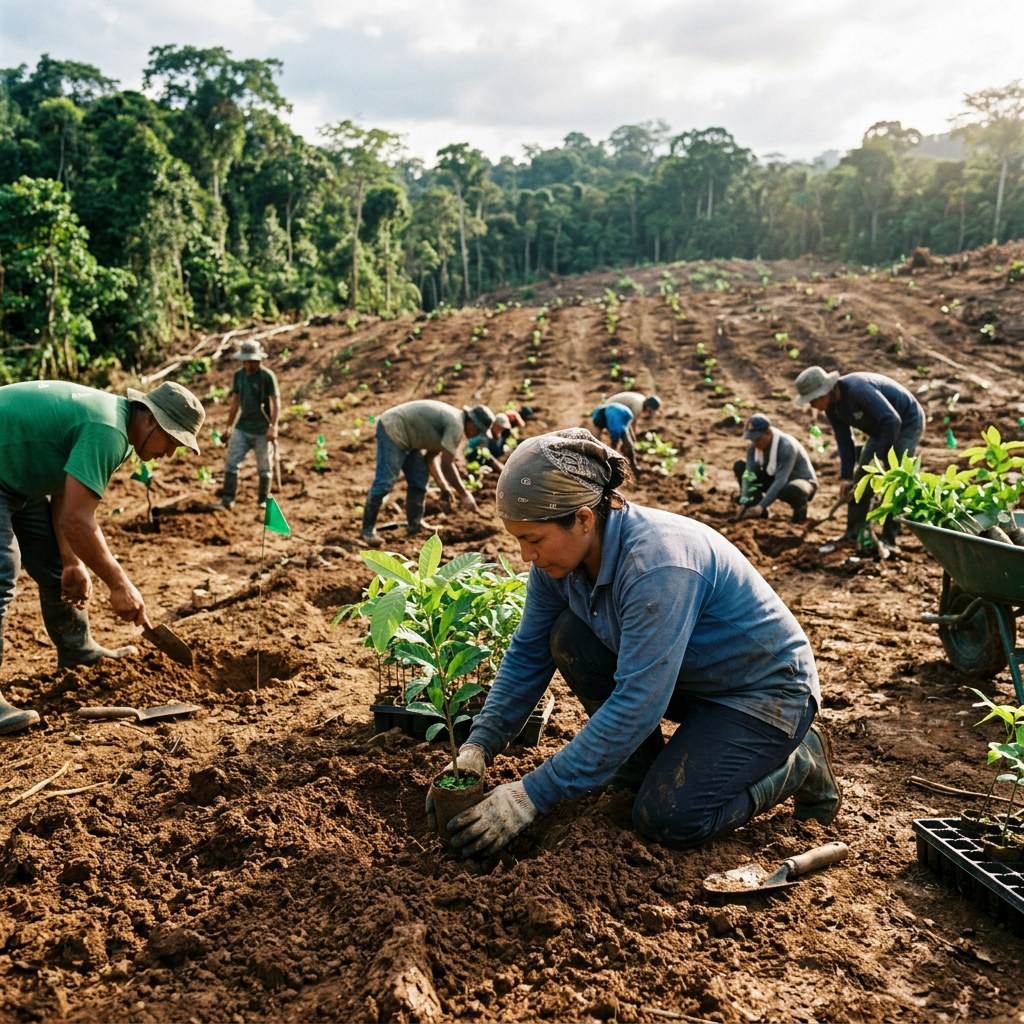
The program’s stated replanting focus is the country of harvest. Country-level planting alone does not demonstrate restoration of a particular forest, compensate for illegal harvest or establish a carbon offset.
Before committing, obtain the dated criteria, assessment method and reporting obligations. Do not infer an audit frequency, sampling method, survival threshold or product-level permission from this overview.
Importer verification is not a shipment certificate
ClearSource’s program focuses on importer sourcing records and replanting commitments at origin. It is separate from FSC and PEFC forest-management and chain-of-custody certification. A ClearSource record does not confer their labels, satisfy a buyer’s specified FSC or PEFC claim, or replace legal due diligence.
Before applying or relying on a record, request the current dated standard, audit scope, auditor identity, decision criteria, mark-use rules and complaints process. Confirm any accreditation directly with the named accrediting body; this overview is not evidence of accreditation.
The evidence a hardwood buyer should request
| Check | Request | Do not assume |
|---|---|---|
| Company and scope | Legal entity, covered sites, activities, products and certificate dates. | A parent company’s certificate need not cover the seller on your invoice. |
| Order and claim | Purchase order, invoice, delivery note and the exact certification claim. | Company certification is not proof that every shipment is certified. |
| Harvest and legality | Species, harvest country and the applicable origin, permit and due-diligence records. | An export port is not a harvest location; a label is not legal clearance. |
| Replanting | Project location, agreement, reporting period, planting cohort and survival evidence. | Trees promised, planted and surviving are different measures. |
Worked example: the certificate is not the invoice
Your purchase order requires FSC Mix hardwood. The supplier sends an FSC certificate for its parent company, but a subsidiary invoices the order and the invoice says only “sustainable hardwood.”
- Check the seller. Ask whether the invoicing subsidiary and relevant site are included in the certificate scope; a shared brand name is not enough.
- Check the order. Ask for sales documentation identifying the eligible product, applicable certificate code and exact FSC claim. Do not add a claim to the supplier’s invoice yourself.
- Check the gap. A ClearSource record or planting report does not correct a missing FSC claim. Keep the certification requirement unresolved until the seller and, where needed, its certification body clarify the evidence.
- Record the decision. Retain the dated registry check and corrected documentation. If the claim cannot be substantiated, do not describe the order as FSC-certified.
Illustrative purchasing scenario, not an actual certificate decision or legal advice. See SCS chain-of-custody eligibility and PEFC UK’s discussion of sales-document checks.
Read certification questions and answersBuyer-check references: FSC chain of custody and PEFC Find Certified. These sources do not validate ClearSource’s own program.
Agree the assessment before committing
Define the scope
Identify the legal entity, sites, sourcing activities and customer claims you want assessed. An application is not a certification decision.
Agree the assessment
Obtain the current standard, reviewer identity, document requirements, site-visit terms, fees and proposed schedule in writing.
Review the decision
Request the documented outcome, unresolved findings and approved scope. Use a mark only with the required written permission.
Maintain the record
Confirm reporting and renewal intervals, change-notification duties and what suspension or expiry means under the agreement.
Evidence to prepare for scope review
Verification
- Legal entity, sites and proposed assessment scope
- Scientific species names and volume units
- Harvest-country records, distinct from export ports
- Applicable harvest and export permit evidence
- Reviewer identity, qualifications and decision criteria
Traceability
- Supplier relationships and supplying legal entities
- Covered mills, processors and trading activities
- Purchase orders, invoices and delivery references
- Certificate scope and exact transaction claims
- Documented gaps, substitutions and corrective actions
Replanting Commitment
- Project location and relationship to the harvest country
- Written calculation method, units and reporting period
- Project responsibilities and evidence of land rights
- Planting cohorts and dated survival measurements
- Replacement-counting rules and corrective-action terms
Ready to Get Certified?
Send a summary of your operations for scope review, or resolve questions about fees, evidence and mark use first. An application does not certify a company or an order.